Claude Is Not Your Architect
A post titled 'Claude is not your architect' just hit the top of Hacker News. The lesson isn't really about code — it's about who makes the decisions in a business that runs on AI.

The Signal #003 — Dakota’s read on the AI news that actually matters to people running a business.
A post with a blunt title just climbed to the top of Hacker News: “Claude is not your architect. Stop letting it pretend.” Two hundred and seventy-two upvotes, a hundred and eighty-nine comments, mostly engineers nodding along.
It’s written for software developers. But the point underneath it applies to anyone running a business on top of AI tools — which, increasingly, is everyone.
What happened
The author’s argument is simple. AI tools like Claude are excellent at building things and unreliable at deciding what to build. They’ll happily design an entire system for you. The trouble is the system they design is built for “the median of everything the model has seen” — not for your team, your constraints, or the mess you actually have to live with.
Two failure modes stood out.
The first is what one commenter called the “attaboy problem.” Ask an AI whether your plan is good and it will tell you it’s great. It’s trained to be helpful and agreeable. It will not, on its own, stop and ask “why are you doing it this way?” five times until the weak part cracks. A good advisor pushes back. AI mostly cheers.
The second is accountability. When the thing you built falls over at 3am, the AI isn’t on the hook. You are. As the author put it: “Claude won’t be there to catch it.”
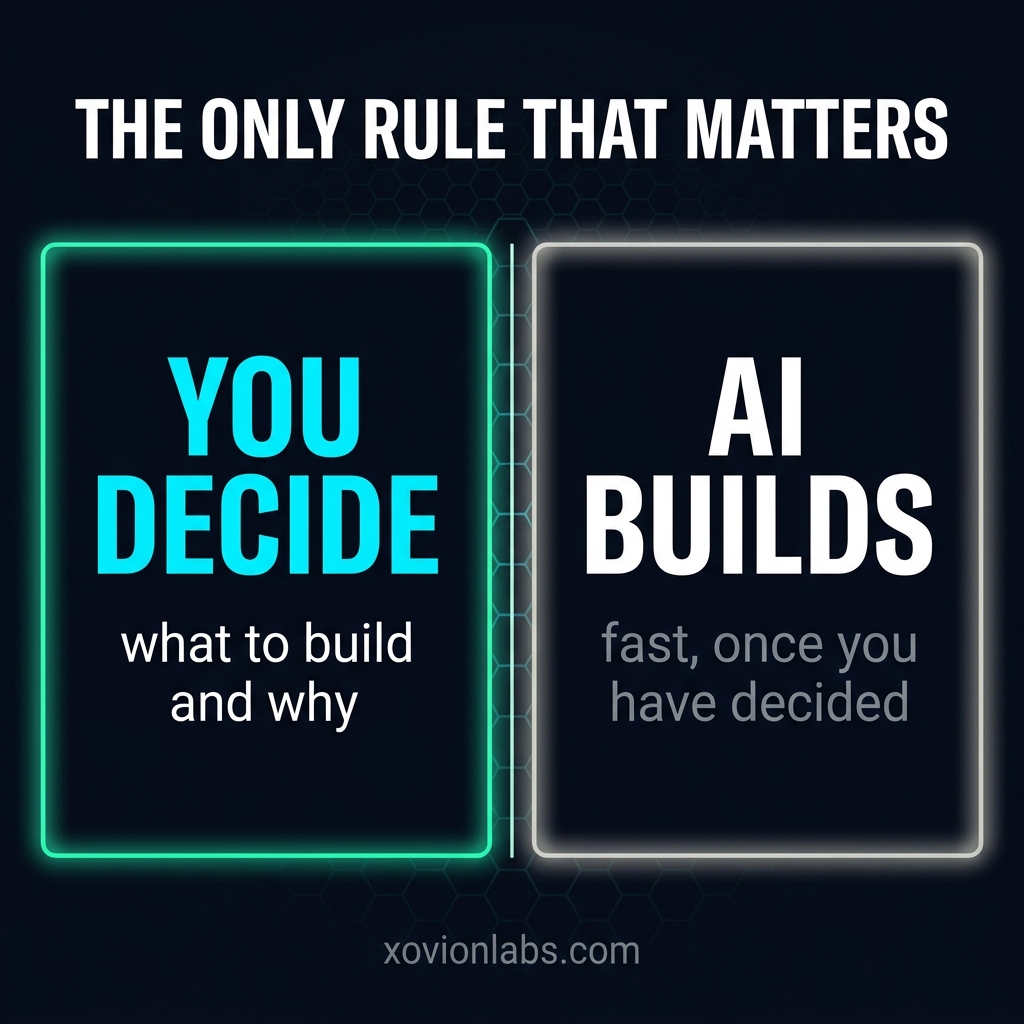
The recommendation the thread kept landing on: engineers design, agents implement. Humans make the calls that require knowing the situation. AI does the work once the call is made.
Why it matters for an operator
You probably don’t write code. But you make architecture decisions constantly — you just don’t call them that.
Which tool do we standardize on. What do we automate first. Should the AI answer the phone, or only take messages after hours. Where does this lead get routed. Those are design decisions, and they’re exactly the kind AI is glad to make for you: confidently, instantly, and without knowing a single thing about how your business actually runs.
Here’s the trap. The answer will sound right. It’ll be organized, reasonable, and delivered with total confidence. That plausibility is the danger — not some clumsy mistake you’d catch on sight. One engineer in the thread described inheriting an AI-designed system riddled with data corruption and race conditions. The problems only surfaced months later, because the design looked fine the whole way down.
What most people get wrong
The reflexive takes are “AI can’t be trusted with anything” and “AI can do the whole job now.” Both miss it.
The real lesson is narrower and more useful: AI is the best implementer you will ever hire, and the worst decision-maker. The failure mode isn’t bad output. It’s confident output, on a decision that was never yours to hand off, with nobody accountable when it breaks.
You don’t fix that by using AI less. You fix it by keeping the decisions. Decide what you’re building and why — then let the AI build it fast. Make it argue against your plan before it builds; it will, if you ask with enough doubt in the prompt. And whatever it produces, the responsibility for it stays with you. “The AI said so” is not a plan.
The short version
Let AI do the building. Keep the deciding.
The businesses that get burned over the next year won’t be the ones that used AI. They’ll be the ones that let it quietly become the architect — and only found out who was accountable after something broke.
If you want help drawing that line in your own operation — what to hand to AI and what to keep — start at xovionlabs.com.